
It’s easy to think of sleep as simply “switching off” — the day ends, the body rests, and everything picks back up the next morning largely unchanged. For children, that couldn’t be further from the truth. Sleep is one of the most active periods of a child’s day, even though it looks like the quietest.
Understanding a little of what’s actually happening can make the effort of a good bedtime routine feel a lot more worthwhile.
The brain doesn’t stop — it reorganises
During sleep, a child’s brain is busy sorting through everything absorbed that day: new words, new faces, the rules of a game learned at school, an emotional moment that hasn’t been fully processed yet. This is when short-term experiences get filed into longer-term memory, which is part of why a full night’s sleep is so closely linked to learning and behaviour the next day.
Growth happens overnight, literally
Growth hormone is released in pulses during deep sleep, which is one reason paediatricians consistently emphasise consistent, sufficient sleep for younger children — their bodies are doing a significant share of their physical development while they rest, not while they’re awake.
Different sleep stages do different jobs
A night’s sleep isn’t one uniform state — it cycles through lighter and deeper stages, including REM sleep, where most dreaming happens. Deeper stages tend to concentrate more in the earlier part of the night, while REM sleep becomes more prominent later on. This is part of why sleep that gets cut short at the end of the night (an early wake-up, for example) can still leave a child feeling under-rested, even if the total hours look reasonable on paper.
Emotional regulation runs through sleep too
Children who are short on sleep aren’t just tired the next day — they’re often measurably less able to manage frustration, disappointment, or change. Sleep plays a real role in emotional regulation, which is part of why an overtired child’s meltdown can feel disproportionate to whatever triggered it. The sleep debt is often doing more of the work than the trigger itself.
Consistency matters more than duration alone
Two children who each get nine hours of sleep won’t necessarily be equally rested if one has a wildly inconsistent bedtime and the other doesn’t. A regular sleep-wake rhythm helps the body anticipate rest, making it easier to fall asleep quickly and sleep more deeply once there — which is a big part of why routine, more than any single trick, tends to be the most effective lever parents have.
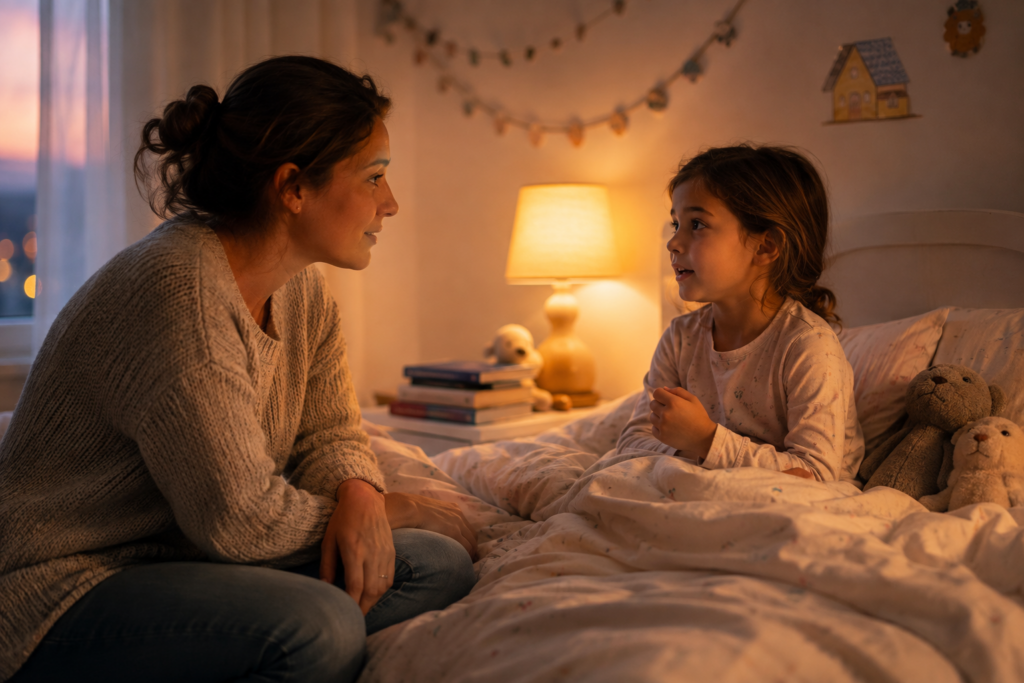
A calm, consistent wind-down — story included — helps signal to a child’s body that rest is coming. With Pillow, that signal can be part of a routine your child actually enjoys, not just one they tolerate.





Leave a Reply