
“One more hug.” “I need water.” “Can you check for monsters again?” If bedtime in your house involves a slow parade of requests that seem to multiply the moment you stand up to leave the room, you’re dealing with one of the most common — and most exhausting — parts of raising young children: bedtime stalling.
The good news is that stalling isn’t defiance, and it isn’t really about water or hugs at all. Understanding what’s actually going on makes it a lot easier to respond calmly instead of running out of patience by the fourth request.
Stalling is usually about separation, not sleep
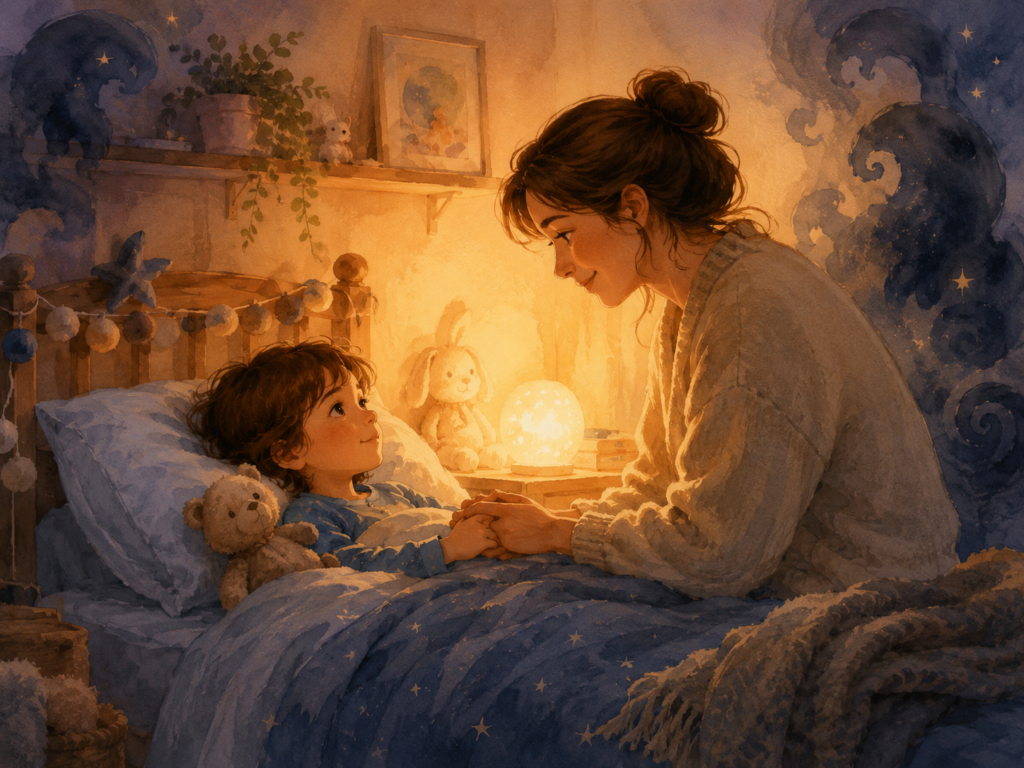
For most young children, bedtime is the moment they’re asked to disengage from you and the day, alone, in a dark room. That’s a genuinely big ask for a developing brain that hasn’t fully mastered self-soothing yet. Each extra request is often a small, instinctive attempt to keep the connection going for just a little longer — not a deliberate test of your patience, even though it can certainly feel that way at 8:47pm.
Set the expectation before it starts
Stalling tends to escalate when a child senses there’s room to negotiate. Before the routine even begins, a clear, calmly stated expectation — “after your story, it’s lights out, and I’ll check on you once” — gives the evening a defined shape. It won’t eliminate every request, but it removes some of the uncertainty that fuels them.
Meet the need once, generously, before bed even starts
Rather than responding to each stalling request individually once you’ve said goodnight, try meeting the underlying needs upfront: a proper drink, a last toilet trip, a final hug, addressed deliberately as part of the routine itself rather than as an afterthought once you’re halfway out the door. A child who’s already had a generous, unhurried version of these things has less genuine need left to stall over.
Keep your response short, warm, and consistent
When a request does come after lights-out, the instinct is often to either give in fully or get frustrated — neither tends to help long-term. A brief, warm, and identical response each time (“I love you, it’s sleep time now”) is more effective than a longer explanation, which can accidentally reward stalling with extra attention and conversation.
Give the story time to do some of this work for you
A calm, engaging story before lights-out can quietly reduce stalling before it starts, simply by giving a child’s need for connection and winding-down time a proper outlet earlier in the routine — rather than trying to squeeze it in through six extra requests once the lights are already off.
Some nights, it just takes longer
Even with a solid routine, some evenings will run long — after an exciting day, a change in schedule, or simply because your child is going through a phase. That’s not a sign anything’s broken; consistency over weeks matters far more than how smoothly any single night goes.
A calm, personalised story before lights-out gives your child’s need for connection somewhere good to go — often meaning less stalling once the story’s done. Try a story shaped around your own child, free for 14 days.





Leave a Reply